Inaugural Commerce Research Day a study in success
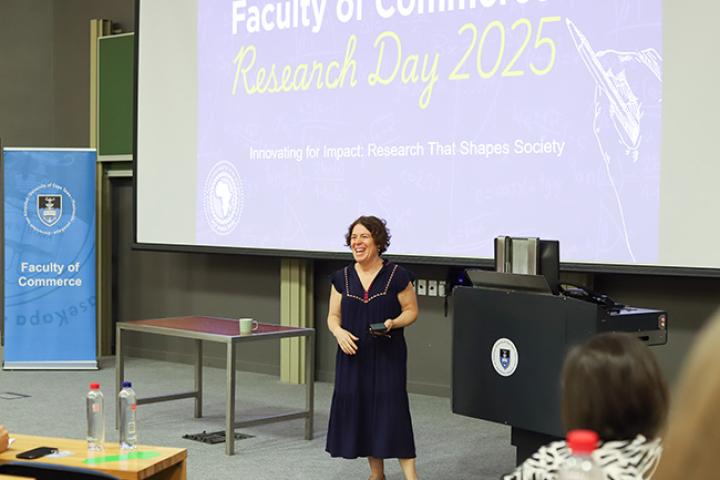
Story Nicole Forrest. Photos Je’nine May.
“Innovating for Impact: Research that Shapes Society”, the event aimed to spotlight the research that comes out of the Faculty of Commerce and acknowledge the breadth and depth of the boundary-pushing, policy-shaping work that is produced by its academics and postgraduate students.
“The purpose of this inaugural research day is threefold. For one, we are here to celebrate our outstanding research contributions, our academic staff and postdoctoral fellows, as well as our postgraduate students,” said the master of ceremonies, Senior Lecturer in the Section of Marketing, Dr Nqobile Bundwini.
“It’s also to recognise the rigour and the relevance of the knowledge produced in the commerce faculty, while creating a space that inspires collaboration, sparks new ideas and strengthens our research culture across departments and faculties.”
Creating collaborative spaces
In her opening address, Dean of the Faculty of Commerce Professor Suki Goodman emphasised the need for creating collaborative spaces where researchers are able to engage with one another. This, she said, is known to create opportunities that can propel academic explorations to new heights.
“We know that the most profound and best research happens in community. Research requires an enabling environment, especially in a faculty like ours where so much of our work is consumed by the academic programmes we offer to prepare the next generation of professionals who can successfully enter industry,” she said.
“Part of contributing to that enabling environment for academics is creating spaces that allow people to play, allow people to experiment and fail safely, and to fortify engagement. Opening pathways for engagements, conversations, and discussions helps us to understand who we are and what we can do together.”
The day, added Goodman, marked a major institutional milestone: for the first time, the Faculty of Commerce contributed approximately 10% of UCT’s total research output, an increase from the historical average of 8%. This achievement reflects the faculty’s growing research productivity, expanding postgraduate pipeline and renewed focus on impactful, socially engaged scholarship.
Research for insight, impact and transformation
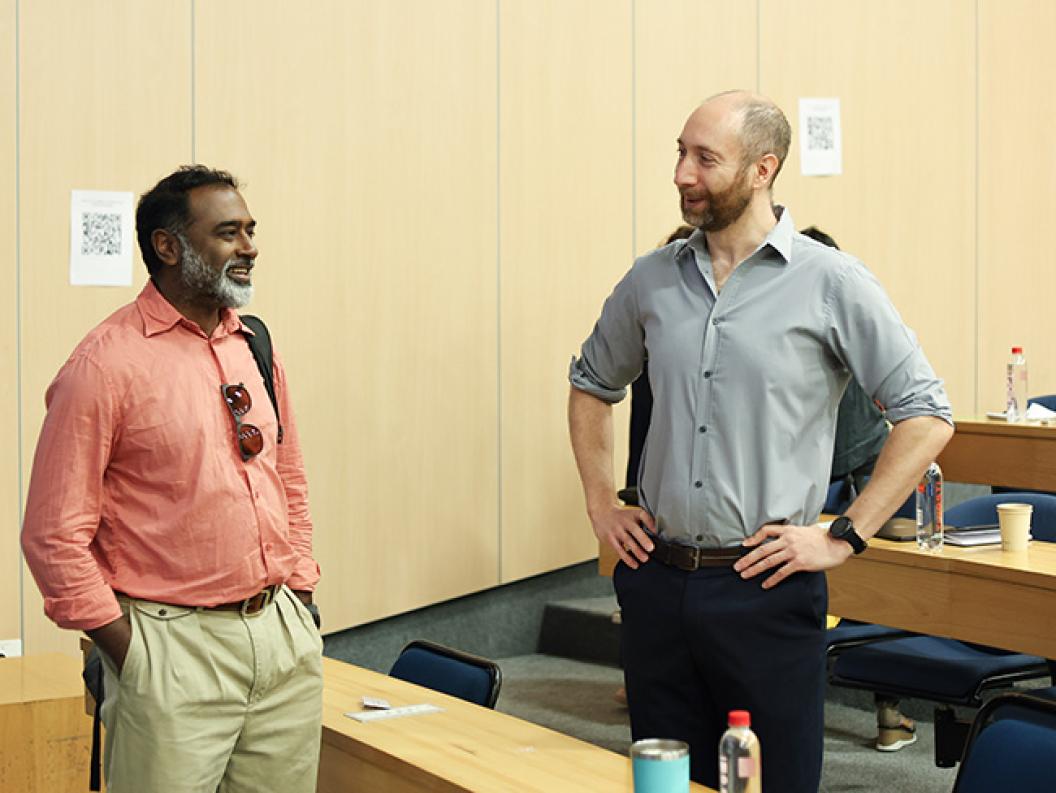
Acting Deputy Vice-Chancellor: Research and Internationalisation, Professor Jeff Murugan, noted that fostering this kind of collaboration is necessary for producing more impactful and insightful research, as well as for achieving transformation.
“One of the missions that we have at UCT is to produce research that ultimately shapes the world that we live in. We often talk about excellence and impact and transformation. Sometimes so often so that it may seem that we’re just using these words as slogans,” he said.
“These aren’t just slogans, though. These are commitments that we have made. They are commitments that shape how we choose our problems. They are commitments that shape how we train our students. How we situate ourselves in the city and country that we operate in, and, certainly, the world.”
According to Professor Murugan, a collaborative approach to research that is transformed by inclusive and equitable practices, and that engages policy, industry, and society, deepens our understanding of the world we inhabit and how we can make it more fair for all.
Critical thinking in an age of AI
Continuing with the theme of transformation, this time from a more technological perspective, Associate Professor Johnathan Shock, Director of the UCT AI Initiative, focused on the capabilities of artificial intelligence (AI) as a tool for leading, exploring, and solving complex issues.
He highlighted that critical thinking and a drive to engage critically with our own work and the work of others will be invaluable tools in a world where AI, particularly generative engines like ChatGPT and Claude, are being used to perform tasks that previously would have been seen as requiring intelligence to execute.
“There are generally two main ways we can look at AI. One being that it’s an analytical tool. It’s another instrument we can use to process vast amounts of data and find patterns where the sheer volume might prevent humans from being able to do so.
“We also have this new wave of thinking about generative AI as a collaborator. The issue here comes in with the fact that, while human-AI collaboration enhances task performance, it undermines our intrinsic motivation.”
As far as research is concerned, Associate Professor Shock said, rather than using AI to take over our thinking, academics should be investigating how this technology can enable them to do something richer and more interesting than they would have been able to before.
“There’s a real problem of cognitive offload. Using a tool like this tends to make us turn our brains off. So what we need to be thinking about is not ‘How do I make life easier for myself?’, but ‘How do I use my brain in collaboration with this AI in the most powerful way possible?’”
Ongoing effort and collaboration
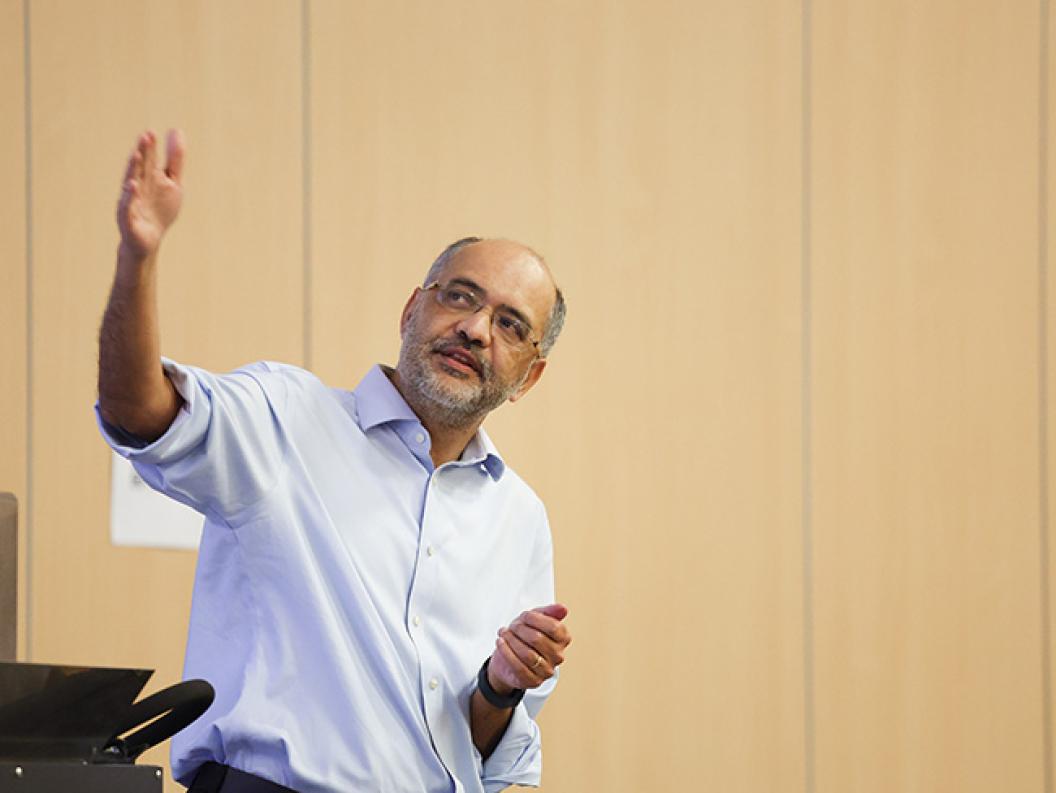
Professor Haroon Bhorat, Director of the Development Policy Research Unit, emphasised the importance of this kind of continuous questioning in order to build a sustained academic research career. He noted that this requires deliberate and ongoing effort, as well as collaboration.
“You have to do the hard work. The data analysis, desktop research, the literature reviews, the report write-ups, feedback, revisions. Then you have a working paper, and then the final peer-reviewed piece. But that is not where the work stops,” he said.
“The last stage is about the addresses and conferences and getting your work out there. If you aren’t attending these events and engaging with other researchers and policymakers and the public, then no one is going to know about your work and it cannot have an impact.”
Professor Bhorat stressed that the visibility of research is inseparable from its credibility. The same discipline that goes into producing high-quality scholarship must extend to how that work is shared, ensuring that findings reach decision-makers in a form they can use.
“When you sit in front of audiences and communicate your findings, the reason they're actually listening to you is not just that you are telling an important story, but you're telling it in a way that is academically credible. Policy makers know this. Politicians know this. They thirst for credible policy guidance,” he explained.
“There is also an art to how you present your research. You can do really powerful, important, valuable research, but if you don’t translate it, it isn’t going to be of much use. You need to translate your findings in a way that you don’t lose any meaning, but that also you can take it to your audience and have them understand what you’re saying immediately.”
Commerce Research Day 2025
In addition to the insightful keynote addresses and remarks from both the Dean of the Faculty of Commerce and the Deputy Vice-Chancellor for Research and Internationalisation, the day’s programme reflected these themes in practice through 9 projects that have already had a noticeable societal and industry impact:
- Associate Professor James Lappeman presented insights from The First 100 Paycheck Report, offering evidence on how South Africans navigate financial pressures in their early careers.
- Dr Nicole Vellios discussed the Control of Tobacco Products and Electronic Delivery System Bill, reflecting on policy implications for public health.
- Professor Ameeta Jaga shared findings from The Motherload Project, highlighting the invisible burden of care work.
- Professor Ines Meyer presented her influential research on the Living Wage and its effects on worker well-being.
- Mr Grant Oosterwyk examined patterns of Gun Violence in South African communities.
- Associate Professor Nicole Branson unpacked critical trends in Inequality Research and addressed persistent gaps in Education Inequality, offering evidence-based pathways for reform.
- Dr Ayesha Sayed explored innovations in Agricultural Derivatives and their role in risk management.
- Professor Shazly Savahl presented research on Child Well-Being and psychosocial development.
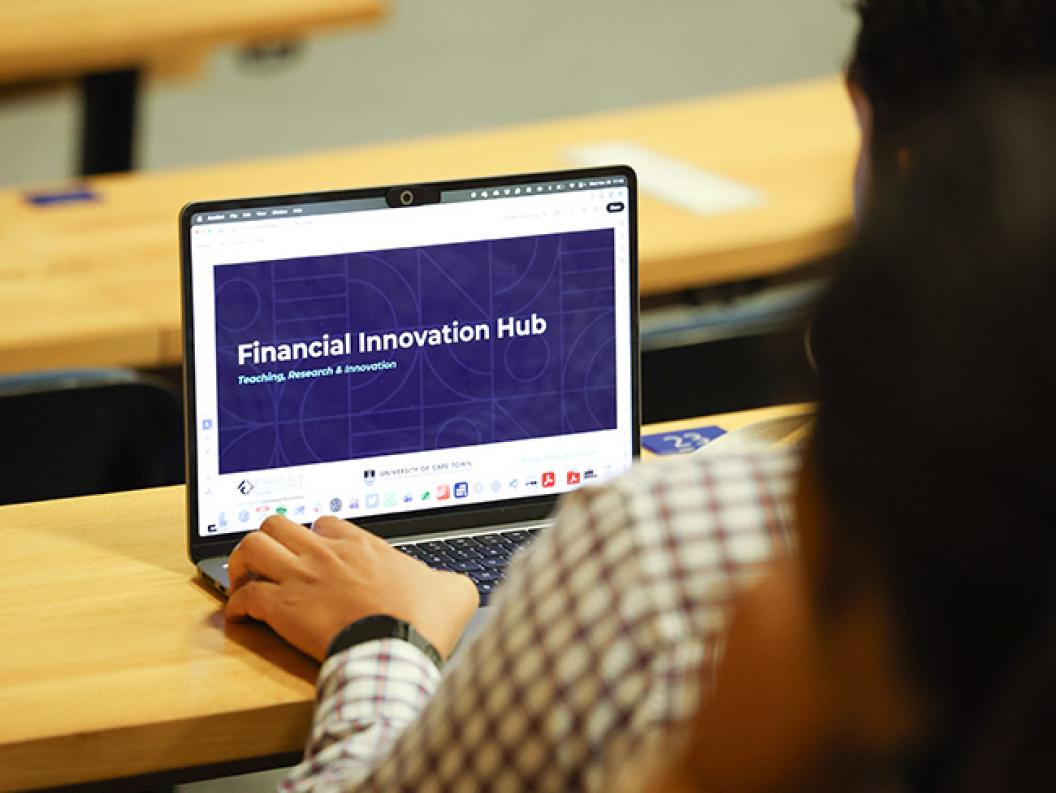
- Dr Allan Davids showcased the evolving landscape of financial technology through the Fintech Hub.
In addition to the main presentations, the programme included a dedicated poster presentation session where 10 postgraduate students showcased their research. This platform not only amplified the voices of emerging and established scholars, but also demonstrated the faculty’s growing commitment to nurturing the next generation of researchers.
During the closing remarks, Deputy Dean: Research, Internationalisation and Socially Engaged Scholarship Associate Professor Nkosivile Madinga honoured Faculty of Commerce scholars who have been awarded A1 ratings by the National Research Foundation (NRF).
“In the South African research landscape, the NRF A1 rating represents the absolute pinnacle of scholarly achievement. It is not simply an award; it is a statement that a researcher is among the very best in the world, consistently producing work that shapes global thinking and advances their discipline at the highest levels,” he said.
Only three scholars in the country, Professor Harold Kincaid, Professor Don Ross and Professor Harald Winker, hold this elite rating for economics. All of whom are members of UCT’s Faculty of Commerce. Their presence in the faculty underscores a strong culture of excellence and global research leadership.